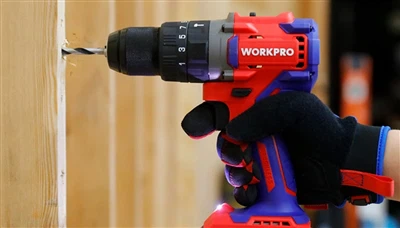



Chucks for holding drills or other cutting instruments are spindle-mounted devices. Faster drill bit changes are possible with their keyed, key-less, and hybrid systems. Drill Chuck Arbors are widely used to connect Drill Chucks to a machine's spindle.
There are two ends to an arbor, one is machined to fit into the spindle, while the other is machined to fit into the drill chuck's rear. The arbor is made of steel. In many chucks, the tool or workpiece is held in place by jaws. This arrangement of the dog's jaws (also known as teeth) is comparable to that of the points of a star.
It's a clamp that permits drill bits to be inserted and tightened. These are standard on all drills, and their purpose is to allow the operator to swap out the bits for various applications. In order to accommodate different bits, the chucks can be easily modified. Newer models are keyless, whereas older models use keys. The most popular sizes of 1/4-inch, 3/8-inch, and 1/2-inch chucks can accommodate bigger bits.
How Drill Chucks Work
The sleeve, gear teeth, body, jaws, and outer shell of a drill chuck are all important components. A ring nut and a key may also be present. A chuck's body places and directs the jaws as they come together and separate during their movement. In order for the sleeve to rotate around its own body, the ring nut must also rotate. As the jaws follow the movements of the ring nut, they lock into place and the ring nut rotates with the jaws.
When the outer shell of the chuck moves, it brings the jaws together or separates them. The drill bit is clamped in place so you can use it when the shell is rotated counter clockwise. Jaws come apart when the shell revolves counter clockwise, allowing you to replace the drill bit.
How to Insert Drill Bits
Keys are uncommon in portable drills, although drill presses are increasingly equipped with them. To use a key chuck, just insert a key into the keyhole on the chuck. Remove the drill bit from the chuck and slide it in using a key. To tighten or loosen the chuck, turn the key clockwise or counter clockwise in the hole. To ensure that the key fits the chuck perfectly, save the original key that came with the drill or drill press when you initially obtain it.
The keyhole or chuck may be damaged if you don't get a replacement from the drill's maker if it isn't made for your model. With keyless chucks, you won't have to worry about the drill bit slipping out of the chuck while tightening. You may tighten or loosen the bit by turning the knob on the top of the chuck, which holds your chuck in place.
Types of Drill Chucks
Drill chucks can be mounted in a variety of ways because to their design. A threaded arbor (shank) or a power drill spindle can be attached to a threaded-mount drill chuck through an internal thread. Models with a tapered-mount configuration feature a JT spindle or shank that is fitted with an internal Jacobs taper. Press-fit tapered mounts lack the concentricity and rigidity that integrated shanks provide.
To ensure that the drill bit can be held firmly in place, the bearing type of a drill chuck is an important consideration. The type of job you'll be doing dictates the optimum drill chuck for you. Plain bearings can be used for stationary drilling, woodworking machines, milling, turning, and other medium-duty applications, as well as light- and medium-duty bearings. Heavy-duty work calls for ball-bearing chucks, which typically require a key.
Which type of chuck is superior, one that requires a key or one that does not?
A cordless drill's chuck is a critical component. You'll find that some Chucks have sleeves that can only be turned by inserting the key into the socket. So-called "key" slits. A keyless slit, on the other hand, is used in most hand drills and braces.

√ Keyed Chuck
To loosen or tighten a tool's grip, keyed chucks can be used with a key. Keyed chucks provide more torque to the bit when slippage is an issue during heavy operations. Both clockwise and counter clockwise rotation is possible for these devices.
√ Keyless Chuck
A drill's chuck collar can be quickly loosened and tightened with a keyless chuck, either manually or with applied torque. Counter-clockwise rotation of the chuck collar releases the tool. Portable drilling equipment can be operated without having to remove the drill chuck from the machine. Sleeves made of metal or plastic are the most prevalent. Drilling can be done in the opposite direction using these chucks as well.
"They are more durable since the shank is built into the drill body, which makes them keyless. In industrial machinery, you'll often find these chucks"
√ Hybrid Drill Chucks
Hybrid drill chucks can be used with either a keyed or a keyless chuck. The keyed section is adjusted on the chuck to increase gripping and torque support, while the keyless section tightens automatically.
Is it better to have keyless Chucks?
With some keyed chucks having runout as low as 0.0006 inches, most machinists and experts believe they are more exact. A keyless drill chuck can be used on manual milling machines when the holes are just required for clearance and there is no defined tolerance.
Chuck Size
One of the most important selections you'll make is the chuck size you select. It's possible that this will have a major impact on your ability to use the drill.
The chuck size determines the maximum bit size that can be inserted into the drill. One rule of thumb is that a bigger chuck will allow for a bigger bit size to be used. For many applications, however, the size of the chuck needed is governed by the purpose for which it is intended. The most common sizes are 1/4, 3/8, and 1/2 inches.
The chuck size is an important consideration while searching for the right drill. To make things easier, let's look at some of the things to keep in mind.
What are the Common Chuck Sizes?
There are common standard chuck sizes for the drill. The way you want to use the drill will have a big impact on which one you select.
● The initial standard size is 10 mm (3/8 inch). Smaller and less powerful than those with a larger chuck, these tools have less torque and are less accurate. This is compensated for by the fact that they are frequently less expensive than other drills.
● The next most frequent size is 13mm, or half an inch. Drills of this type tend to be larger and more professional. It's because of this that they can be used for more diverse duties. However, they will be more expensive.
FAQ
Q: In making my decision on a drill chuck, what things should I keep in mind? The chuck size determines the maximum bit size that can be inserted into the drill. One rule of thumb is that a bigger chuck will allow for a bigger bit size to be used. Q: Is it important how big the chuck is? Because of its size, the drill's maximum drill bit diameter may be calculated, as well as its overall power. |
Conclusion
An important part of the downhole drilling assembly is the drill chuck, which helps to ensure that the drilling bit is centered. Drill chucks can be keyed, keyless, or a combination of the three.
A tool's grip can be tightened or loosened with the turn of a key in a keyed chuck. Keyless chucks can quickly loosen and tighten a tool on the chuck by manually loosening and tightening the tool or by using torque. There are hybrid chucks with and without keys.
The chuck's life can be prolonged by positioning the drill bit so that the exhaust grooves are adjacent to the areas of the chuck that are less worn out.