One look at one's budget is all it takes for many aspiring woodworkers to get concerned about their ability to purchase a full shop worth of power tools in order to get started. It's a good thing that getting started doesn't require a large outlay of cash. There are only seven essential woodworking tools that any beginner should have on hand, and most of them are quite affordable. A novice may, however, handle practically any project with these seven items.
1. Circular Saw
There are others who think that the circular saw is best used for carpentry rather than exquisite woodworking. Circular saws may be the most versatile handheld power tool. Circular saws can be just as accurate as table saws when used with a clamp-on straight-edge, and they can perform many of the same jobs, such as cutting sheet materials like plywood and medium-density fiberboard (MDF). As a beginner in woodworking, a high-quality circular saw should be your initial investment.
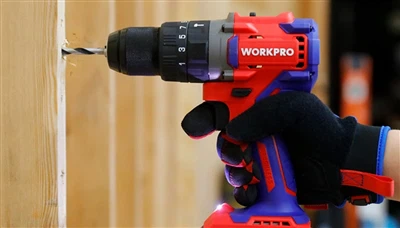
2. Power Drill
A corded drill is more versatile and powerful than a cordless drill when it comes to basic power woodworking tools. It's true that cordless equipment can be more convenient, but corded drills are less expensive, and they can perform more tasks. Corded power drills come with a variety of chuck sizes, keyed or keyless, straight or hammer drills and other features to take into account. Be aware of all of your options prior to making a purchase.
3. Jigsaw
A jigsaw is an absolute necessity for anyone just starting out in woodworking. Cutting curved and circular patterns in stock is easy with a jigsaw. The jig saw (also known as a saber saw) is a great tool for beginners, but a band saw is more precise and can cut heavier stock. Choose a corded, orbital-action jigsaw with a simple blade-changing system and a comfortable grip for maximum adaptability.
4. Random Orbit Sander
In terms of hand-held power tools, a random orbit sander comes in at number four on the list of essentials for any newbie. Sandpaper can be split into quarters for palm sanders, while the random orbit version employs hook-and-loop connected disks for sanding. Unlike other sanders, which leave patterned scratches in the workpiece, the random orbit sander does not do so. When sanding, the idea is to use finer and finer grains, therefore make sure your local woodworking supply store offers sanding disks in various grit sizes so that you can match the model.
5. Table Saw
Once you've mastered the use of the aforementioned four hand-held power tools, it's time to make your first (and most crucial) large tool purchase. Almost every woodworking shop relies on the table saw as the central hub around which all other instruments are arranged and used. In addition to its capacity to cut sheet goods with absolutely straight edges, the table saw is capable of making miters, bevels, and even dado grooves if you so desire.
Because this table saw will serve you for many years to come, you should acquire the greatest one you can afford. Decide which characteristics are most important to you, then shop around for the table saw that best meets those requirements.
6. Compound Miter Saw
Compound miter saws are a logical next step after settling on the ideal table saw for your woodworking shop. A compound miter saw, while not as pricey as a high-quality table saw, is essential for cutting angles (beveled, mitered, and compound cuts). Because a compound saw's motor head may be angled in two directions, it can cut both straight and beveled miters (compound cuts). While a 10-inch saw would suffice for the majority of first-time users, upgrading to a 12-inch saw will allow you to do more. Cutting angles and crosscuts on boards up to 16 inches wide is possible with some models' sliding saw heads. When you learn how to use a compound miter saw, you'll notice that your circular saw and table saw aren't being utilized nearly as frequently.
7. Router
The final piece of equipment advised for new woodworkers is a high-quality router. Routers are ideal for cutting rabbets and dados as well as other decorative features on workpieces. Many routers on the market now have the ability to connect to two different types of networks (a stationary base and a plunge router base). However, for most novices, a good fixed base model would suffice, as it can be put on a router table if that is what you ultimately decide to purchase. Select a router with a motor capacity of at least 2 horsepower. There are other characteristics to look for, such as electronic variable speed controls (because larger cutting bits should be used at slower rates), a soft start mechanism, and an easy-change bit collet (ideally with the ability to use both 1/2" and 1/4"-shank router bits).