Discover how simple, affordable, and functional dovetail joints are. You'll be creating dovetails like a master with just nine simple tools and this step-by-step instruction!
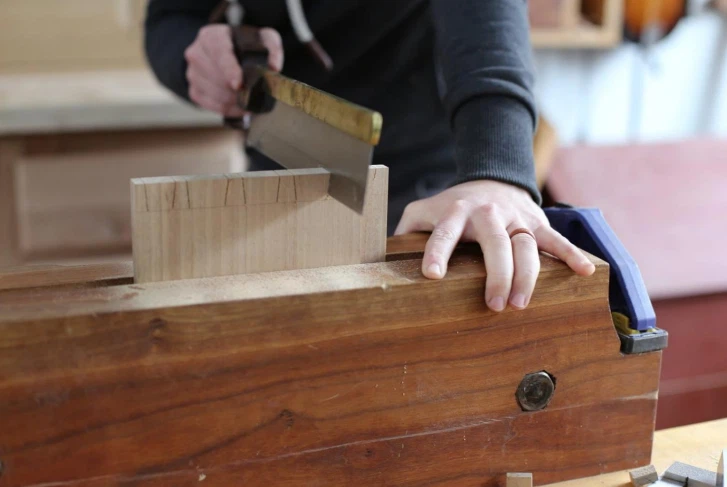
It gives me great pleasure to instruct others in the art of cutting dovetail joints by hand rather than with complicated power instruments. Dovetails have been cut by hand for thousands of years, as evidenced by the fact that they were found in the tombs of ancient Chinese emperors and Egyptian mummies, both of which were uncovered in recent years.
Dovetails were common in ancient times because hand-forged nails were the only option available at the time and were prohibitively expensive to produce. As a result, dovetails were widely used. If you go to an antique store and look at the drawer structure (making note of the drawer fronts and drawer sides) of ancient furniture, the dovetails you find are probably not going to be particularly appealing to the eye.
Because the dovetails were tucked away inside the drawer, functionality was given priority over appearance. They were not designed to be the Mount Everest of woodworking; rather, the purpose of them was to join two pieces of wood together. Dovetail joints come in four distinct varieties: through dovetail, half-blind dovetail, secret mitred dovetail, and sliding dovetail. The through dovetail is the most fundamental of these four varieties, and it is ideally suited for hand cutting.
They are not nearly as difficult as one might think from reading the general consensus on the internet. My experience has led me to believe that anyone can cut a totally functional set if they are provided with some fundamental training, nine fairly fundamental instruments, and an afternoon to spend in the shop.

Dovetail Joints: How to Cut Them
MATERIALS NEEDED
• Bench Hangers (Optional)
• Two square wood pieces
• Vise
• Square
• Gauge for Marking
• Knife
• Dovetail Pencil
• Backsaw
• Saw Lubricant
• Coping Saw
• Chisel
• Pencil
• Mallet
• Glue
INSTRUCTIONS IN STEPS
1. Use the tailboard to start tracing out the dovetail joinery of the pins and tails.
2. Place the marking gauge just past the thickness of the board and tighten it up.
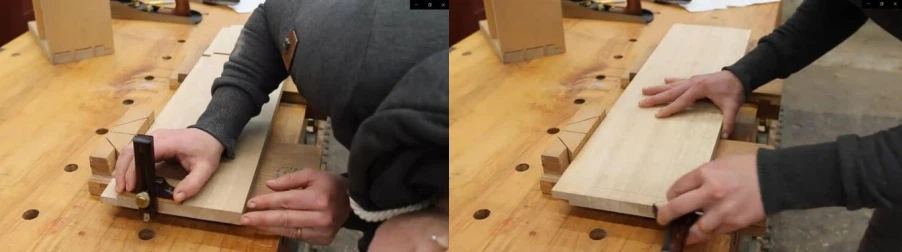
3. Using the marking gauge, make a mark along the entire edge that will be cut into dovetails. Start by making a light pass, and then make a couple of additional passes to progressively make the mark deeper.
Bench hooks are not essential, but they are useful at this stage because they allow you to push away from yourself as you draw the marking gauge toward yourself. This helps maintain the wood steady while you make your markings on the wood.
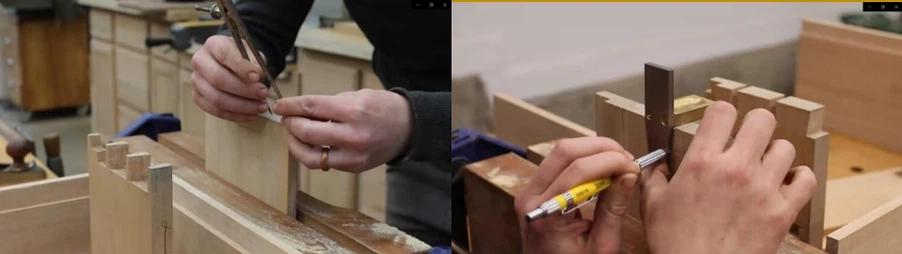
4. Position the tailboard in the vice so that the rear of the board is facing you. Just before to fully clamping the board, check that it is nice and straight by using a square. The goal here is to have a pinboard that is precisely vertical in every direction so that the dovetails may be neatly assembled.
A helpful hint to keep in mind is that the bottom board is the one that is least noticeable, making it a good location to begin. During the learning process, any mistakes that are made are easily covered up.
5. Using dividers, draw the dovetails in the joint.
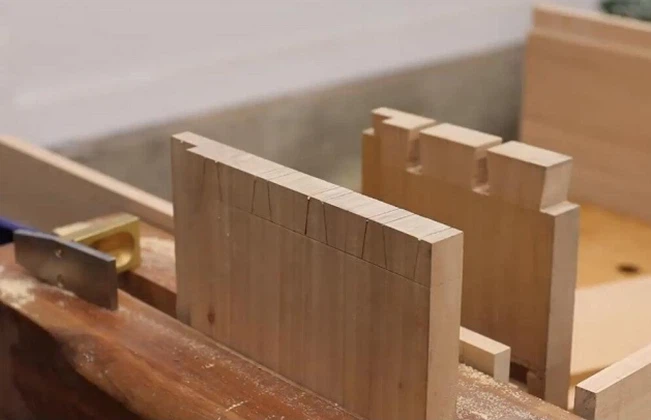
6. Cut grooves along the specified divisions on the horizontal end with a knife and a dovetail marker.
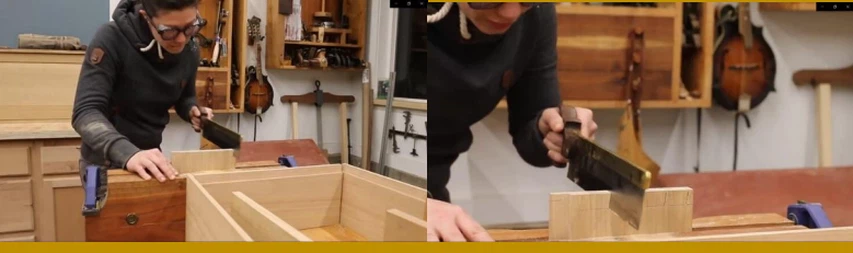
7. Cut grooves in the vertical end, following the design of the dovetail marker.
8. Using a lubricated backsaw, cut the tails to the desired depth. Work from the side of the board that faces you, so that any bits or chips fall out on the opposite side, which will be the interior of the joint.
Pro tip: Mark the tails you're going to cut out with a pencil. This helps you keep track of the tails you're removing so you don't remove the wrong piece.
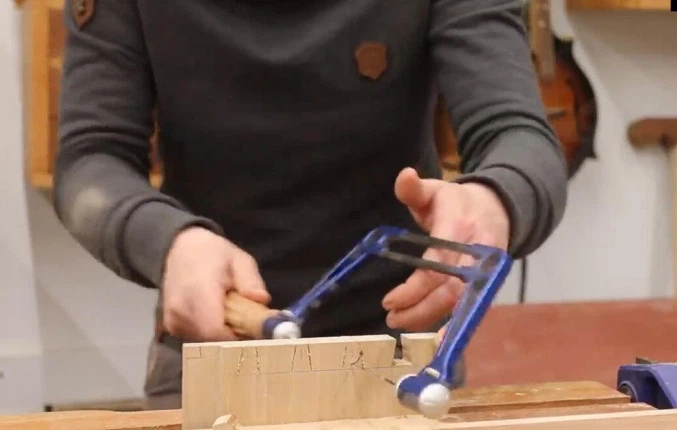
9. Using a coping saw, complete removing the dovetails' bottoms.
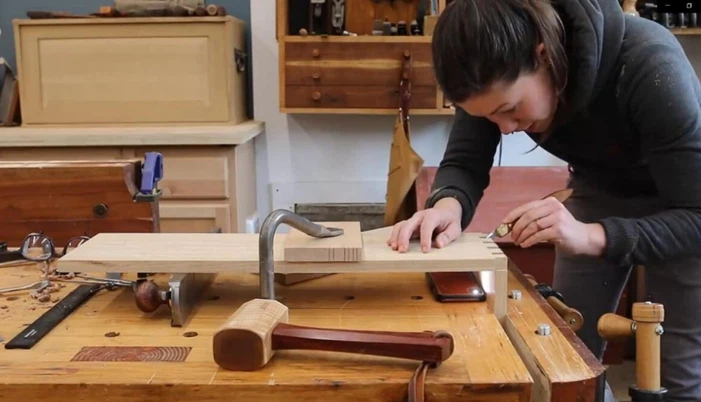
10. You can now use the board you were working on to make a dovetail jig that will transfer the "C Tails" to the "C Pins" on the pin board. This may be done by using the board you were working on. Place the pin board in the vice in a square position, in the same manner, that you would place the tail board. Put the tail board in place so that it is perpendicular to the top of the pin board, and then fasten the back end of the tail board so that it may lie down flat. Use a square to ensure that the boards are all at the same level.
11. Using the marking knife, create grooves on the horizontal edge of the pinboard to mark out the tails.
12. On the vertical edge of the second board, define the tails by cutting grooves with the dovetail marker. A helpful hint for cutting dovetails for the pin board is to focus on making vertical cuts rather than horizontal cuts that are level, as is done when cutting dovetails for the tail board.
13. Lubricate the backsaw and cut out the tails as in step 8.
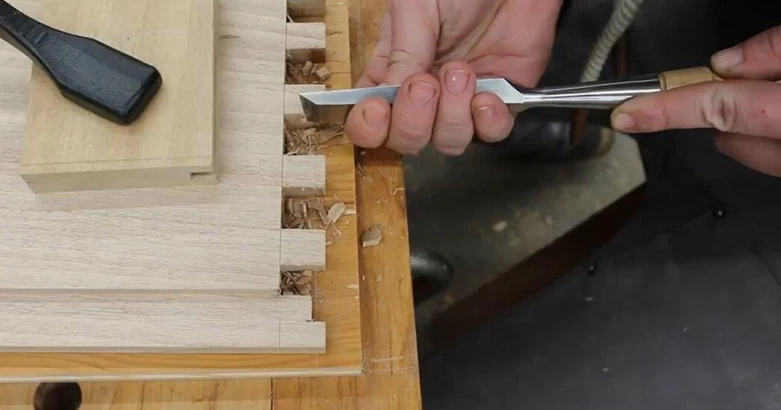
14. After cutting the required number of tail boards and pin boards with the saws, use the chisel to scrape away any residual bits in the cuts. Begin at the rear side of the board and go 34 depths with the mallet and chisel. Flip the board over to the "show side" to tidy up the horizontal cuts.
Pro Tip: To save time, get a chisel that is the same width as the dovetail marker's narrowest end. This allows you to make one clean pass at the bottom of the dovetail, resulting in a tighter fit.
15. Using the square, double-check each mating piece to ensure it is level. Furthermore, ensure that there is no material resting proud of the junction that will prevent the dovetails from the entire seating. Any errant material must be removed using the chisel and rechecked with the square.
While I don't like to test fit my joinery, I do want to ensure that everything goes smoothly during the final assembly. To that purpose, draw a line across the points of all your pins with a thick pencil and gently press the mating boards together. If any tails or pins remain proud, the pencil carbon will transfer to the opposing board, indicating where you should remove a little material. When doing this, it's critical to re-test frequently because removing material from one location may cause another area to seat differently. The ultimate goal is to get enough confidence in your sawing to construct your dovetails saw cut to saw cut. The more you fidget and fiddle with your joints, the more hours you devote to your tasks and the greater the possibility of adding or worsening inaccuracy.

16. Once all of the components are exactly aligned, apply glue to all surfaces that will match, and fit the tail and pin ends together.
Pro Tip: I like to pre-finish the interior of my cases before glue-up to avoid glue marks and finish absorption problems later on. Most yellow glues have a 30-minute open time. Clamps aren't necessary for well-cut dovetails, but having clamps and cauls on hand is usually a good idea. I also keep a piece of wood that is slightly thinner than my tails on hand to tap the tails together to ensure they are completely installed. Before leaving, I examine the case for squareness and let the glue dry. Plane or sand your pins flush, then apply your preferred finish to truly make them stand out. I like to leave the baseline, so I don't remove much material, and that simply adds to the fact that the piece was done by hand.