Will you soon be embarking on a new job or doing a project that requires exact measurements? Do you not know what kinds of measurement instruments you will need before you begin? Stop searching now! Here you may discover a comprehensive list of measurement equipment. Before you begin the project, be sure to add these to your shopping list. Instead of wasting time, let's figure out what you require.
1.Tools for Measuring and What They Do
Like a laundry list, you probably don't want us to name the many kinds of measurement tools. You are interested in learning what kinds of measurement instruments are required for a certain application or application. On the other hand, you might like to double-check that the measuring instrument you currently own is adequate for the task at hand.
2.Many Forms of Accurate Measurement Instruments
At the forefront of our tour is the precision measuring equipment that finds widespread application in fields as diverse as machining, fabrication, quality assurance, electronics production, scientific research, medical imaging, and many more. However, why are precise measurement instruments required for such tasks?
-
Error and waste minimization
-
Placing safety first
-
Consistency and repeatability
-
Reaching expectations in the field
-
Innovations in technology
I understand. Thus, this is the rationale behind the necessity of accuracy. However, which measurement instruments are deemed to be of high precision?
All of the items on this list have specific purposes:
-
Measurements down to thousandths of an inch can be displayed by micrometres, which are capable of measuring extremely short distances (usually up to 1 inch) with remarkable accuracy.
-
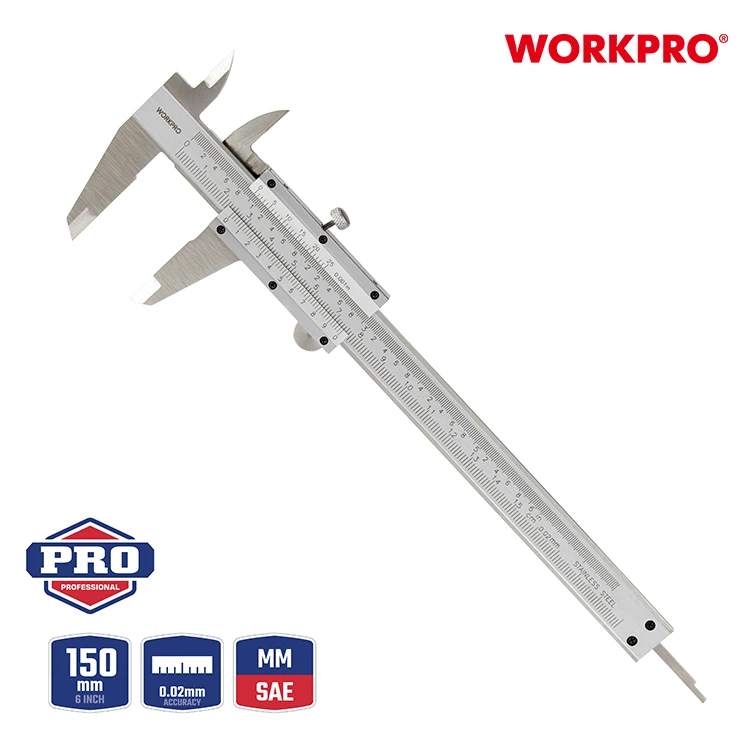
Measure the distance between two points on an object using callipers. These might be digital, vernier, or dial.
-
Bore gauges are used to measure the diameter of cylinders, holes, or bores.
-
Dial Test Indicators (DTI): Tracking minute changes in surface flatness or linear distances.
-
Using a height gauge, one can find the exact vertical distance from an object or feature to a standard surface.
-
Depth gauges are used to measure the depth of various workpiece features, such as slots, holes, and recesses.
-
to set and calibrate other measuring instruments and for producing extremely precise measurements, gauge blocks-also called slip gauges or Jo blocks-are precision-machined blocks made of ceramic or metal.
-
Accurately measuring the intricate geometrical properties of three-dimensional objects is the job of coordinate measuring machines, or CMMs. Important for developing products and ensuring quality.
-
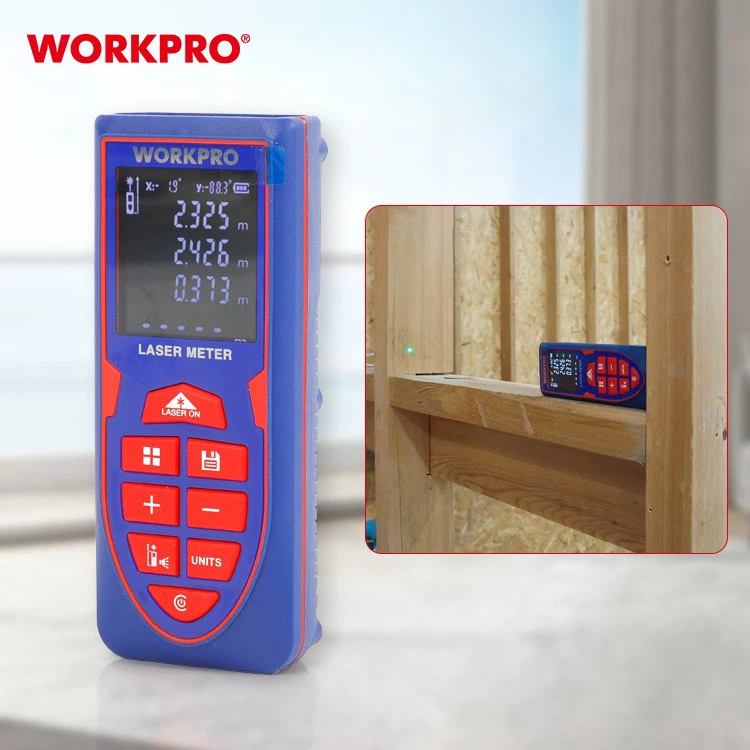
To measure distances and produce digital profiles of objects, laser measurement tools such as laser scanners and distance meters are utilized.
-
Optical tools for measuring angles in both the horizontal and vertical planes are known as theodolites.
-
For all-encompassing measurements, use a total station, which integrates a theodolite and an electronic distance meter.
-
Micropipettes are commonly used in biology labs for measuring and transferring extremely small quantities of liquid.
3.Tools for Workshop Measuring
A wide variety of measurement instruments are required for the many operations performed in a workshop. Consequently, you'll require specialized equipment for each. Ok, let's check it out.
To perform standard measuring tasks, you will require:
Ruler
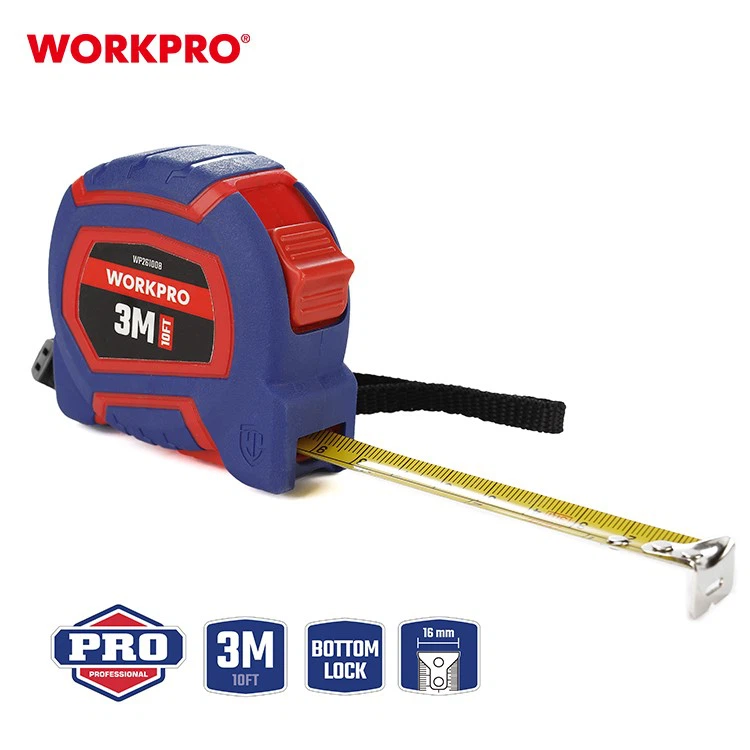
1.Measure more extensive areas or those with curves with the use of a tape measure.
2.Portable Folding Rules for Any Project
3.Make an effort to combine squares in a way that guarantees proper angles, levels, marks, and more.
4.Angle measurement and transferring tools: protractors
What is required for alignment and levelling?
-
Using levels, you may check if a surface is flat or vertical.
-
Compact Torpedo Levels for Limited Spaces
You may also require the following measuring instruments:
-
To determine the thread size of fasteners like nuts, bolts, and screws, a thread pitch gauge is necessary.
-
To find the angles between two surfaces, you can use an angle finder.
4.Variety of Carpenter's Measuring Tools
A large portion of the measurement tools mentioned above are utilized by carpenters in their workplaces. On top of that, they furthermore make use of:
-
With carpenter's pencils, you may draw a wider, more noticeable line.
-
Use a bevel gauge to accurately measure and recreate any angle, even the most unusual ones, when working with wood.
-
Angle gauges are useful tools for precise angle measurement and setup in joinery and mitre cutting.
-
For long-distance, straight reference line drawing on wood, use a chalk line reel.
-
Squares for framing and layout work; sometimes called carpenter squares.
-
Carpenter's Levels: Crafted with magnetic edges for woodworking operations
-
For accurate angle cuts and angle transfer, sliding T-bevels are a must-have tool.
-
The carpenter's compass is a useful tool for drawing circles and arcs on wood.
-
For precise angular cutting, a mitre square is an indispensable tool.
-
The Speed Square combines the best of level, square, and marking functionality.
-
Rafter Square: A tool for accurately positioning and recording the pitch or angle of roof rafters
5.Various Plumbing Measurement Instruments
Today is your fortunate day if you're a plumber just starting and are wondering what kinds of measurement instruments you'll need for the job. The following content will be helpful regardless of your level of experience. You should periodically refresh your toolbox because the world of tools is constantly evolving. Perhaps there are a variety of measuring equipment available that will greatly simplify your life. How about we dive into the realm of plumbing life facilitators?
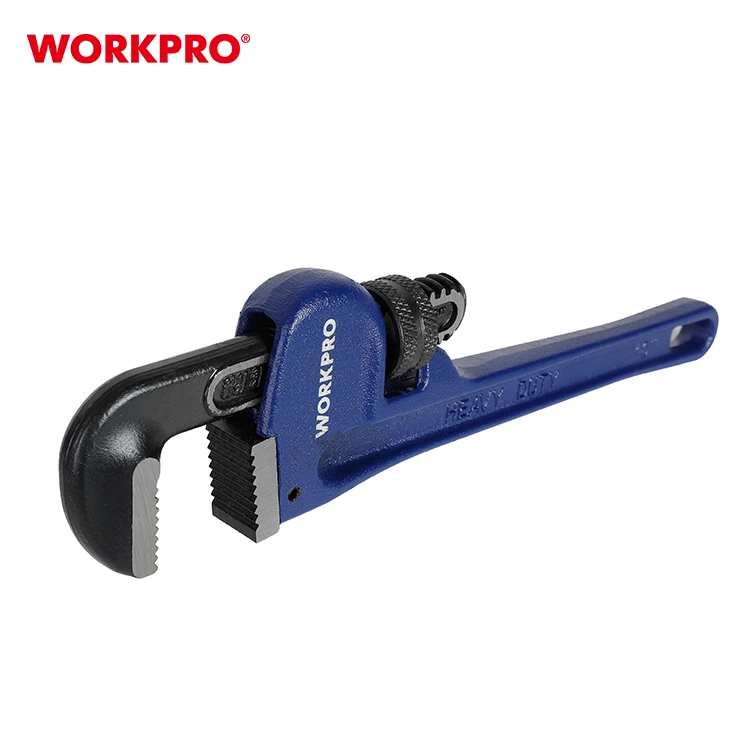
-
Ensure correct drainage slopes in pipes and monitor the level on short lines with a tiny level called a torpedo level.
-
One use for a bubble level is to level a showerhead or faucet.
-
To determine the thread pitch and size of pipes and fittings, a pipe thread gauge is utilized.
-
Integrated Scale for Pipe Cutter
-
A measuring tape
-
Compact Regulation
-
Writing Utensils
-
An optional but highly helpful tool is a tube cutter with scale. Additionally, a soapstone can be used to label pipes.
Also, remember these instruments if you're a skilled plumber who wants to be better at measuring: To avoid leaks, it is important to know the thread pitch and size of pipes and fittings. A pipe thread gauge can help with this.
-
Not necessary, but a laser level makes it much easier to get straight lines across greater distances.
-
To avoid kinks and crimps, pipe benders allow you to shape pipes to precise angles.
-
Pipe fitting gauges: for use in checking if fittings and pipes have a snug fit
-
To create an accurate vertical reference line, use Plumb Bob.
-
Using pressure gauges in plumbing systems allows for the measurement of gas or liquid pressure.
-
To measure the velocity of fluids moving through pipes, flow meters are used
-
Thermometers: Used to keep track of how hot or cold certain fluids in plumbing systems
6.Various Electrical Measurement Instruments
To avoid putting the worker's safety at risk, accuracy is crucial when working with electricity. Consequently, it is necessary to use measuring tools to guarantee correct operation and conformity with electrical regulations and standards.
-
One way to check if a circuit is live without touching it is with a voltage tester, which is also called a voltage detector or a non-contact voltage tester.
-
To measure electrical current without cutting a conductor, a clamp meter is used.
-
Conductors, components, and circuits can have their electrical resistance measured with an ohmmeter.
-
Insulation Tester: a device that measures the resistance of insulation in wires and cables. Important for avoiding electrical fires.
-
Using a circuit analyzer, one may check for open, short, and ground problems in a circuit.
-
To monitor voltage variations, harmonics, surges, and other factors, a power quality analyzer is necessary.
-
Checking the integrity of electrical circuits and connections, as well as the accuracy of wiring, is the job of a continuity tester.
-
To verify that motors, generators, and other three-phase electrical systems are wired correctly, a phase rotation tester is used.